This is the second, and final, part of the article
Click Here to see part one

World War II and beyond The factory worked continuous shifts during the war making components for armaments and aircraft and employed up to 10,000 people, including many women. The AP Aircraft Division at the Leamington site provided undercarriages and aircraft hydraulic equipment for a number of
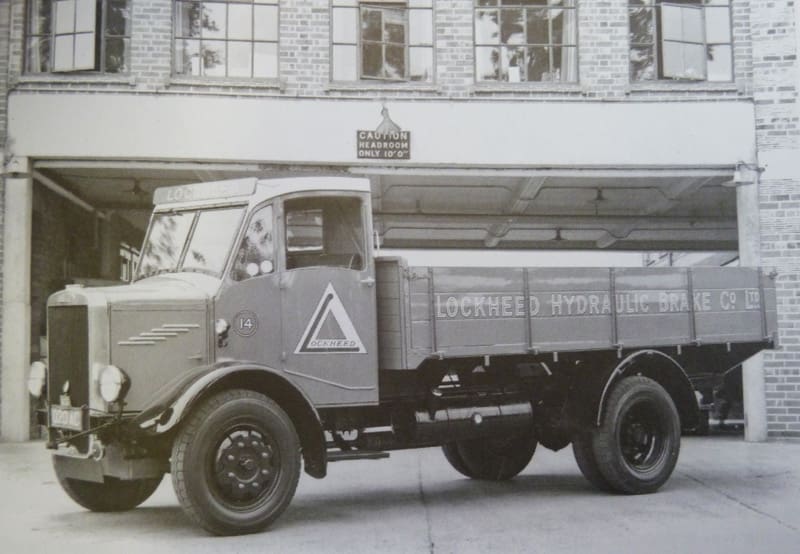
wartime British aircraft including the undercarriage for the Armstrong Whitworth Whitley. AP had supplied the very first tricycle undercarriage for RAF service which was used on the Armstrong Whitworth designed Albemarle general purpose aircraft. The factory was marked as a target on German maps and was subjected to several bombing raids. This aspect is played down in the official company history but, in fact, several employees were killed or injured. After the war AP went on to supply hydraulics and flying control equipment for the Brabazon, Comet, Trident, HS125 and other British and foreign commercial aircraft. Avery-Hardoll high-pressure self-sealing hydraulic couplings were also one of AP Aircraft Division’s specialities. The Aircraft Division was eventually moved from Leamington to Speke airport, Liverpool, and was renamed AP Precision Products Co. Ltd.Such was their reputation that Lockheed brakes were fitted to the car used by John Cobb to set the world land speed record of 394 mph in 1947.
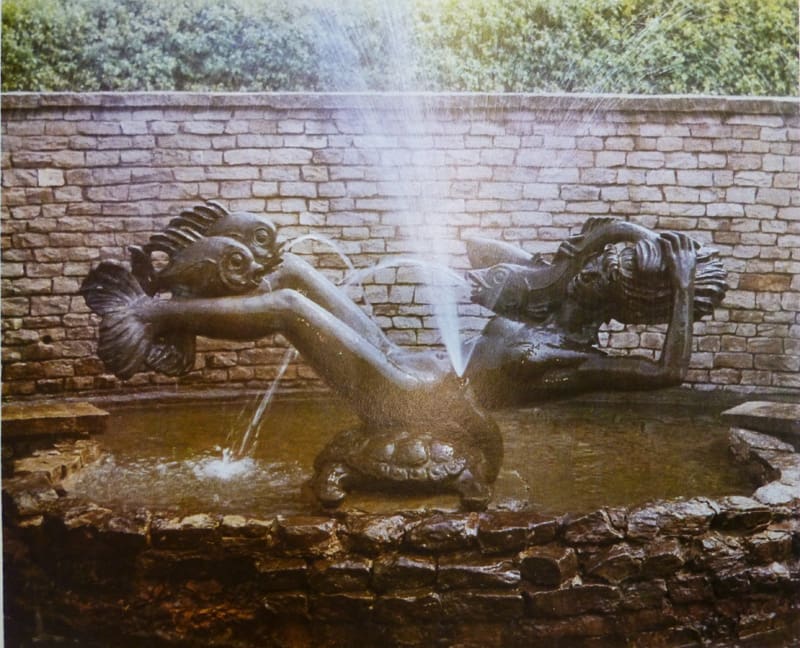
Miranda The company was on the crest of a wave of success and to celebrate the Festival of Britain in 1951 the company commissioned a bronze statue of a mermaid named Miranda which was 2.5 metres (8 feet) long and 1.2 metres (4 feet) high. It was created by sculptor Arthur Fleischmann and was situated at a main entrance to the factory on Tachbrook Road after being on display at the Festival site. It was an unusual representation of a mermaid because she had legs and fish tail fins for feet. It was designated as a listed building grade II but, sadly, it was stolen in 2001 and has never been found.
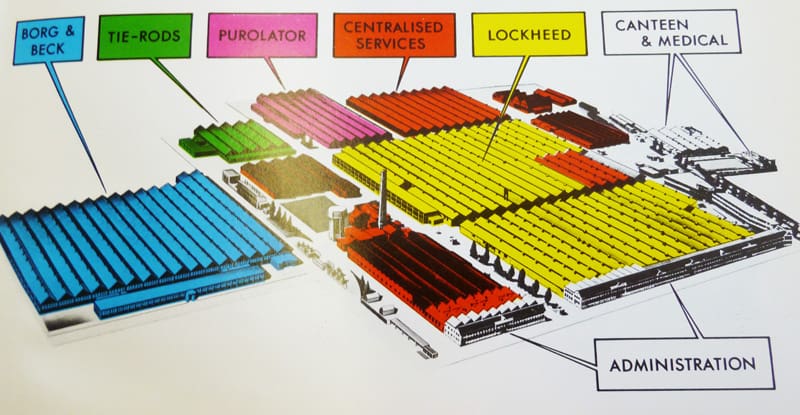
Further Expansion The one millionth set of Lockheed brakes was made as early as 1939 but this achievement was eclipsed when the ten millionth clutch was made in 1958. In 1956 the company supplied an astonishing 50% of the brakes made in the UK and 85% of the clutches.There was a massive expansion in 1956 when a new unit was built to rehouse Borg and Beck clutch manufacturing. At its peak the company owned 200 acres on Tachbrook Road. In 1958 the company was honoured with a visit by HM The Queen Mother who wore a hyacinth blue dress.
The company seemed hungry to grow and bought a firm in West Bromwich in 1954. It also established other sites away from Tachbrook Road with a spares depot in Banbury in 1962 and the factory in Liverpool. Earlier it had established roots in Australia in 1949
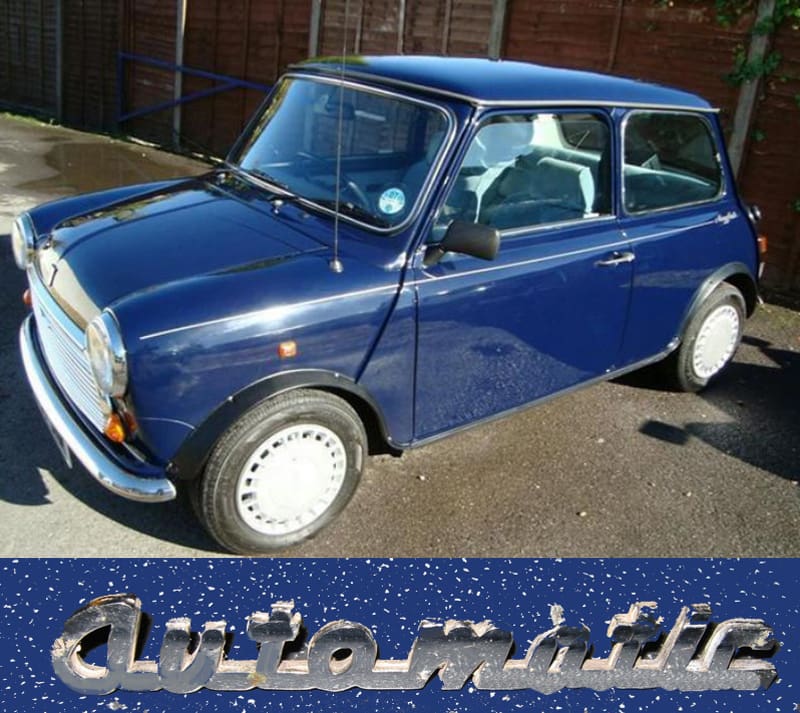
and in South Africa in 1952. The Purolator Filters Division was originally at Tachbrook Road before being relocated to a former mill building at Bolton in 1963. The space vacated by the Filters Division was used for the new Automatic Transmission Division set up to manufacture a radically different and widely well-regarded automatic/manual gearbox for the BMC Mini and Maxi vehicles. It was said at one time that the Automatics machine shop at Tachbrook Road was the largest of its type in Western Europe.
Decline The company declined along with the British motor industry as foreign imports of motor vehicles and components into Britain increased rapidly in the 1960s, 1970s and 1980s and the company was unable to supply to manufacturers at competitive prices. In retrospect, perhaps unwisely, it also licensed products for manufacture by foreign competitors. However it remained the largest employer in the manufacturing sector well into the 1980s. In 1974 it employed 5,483 people; the next largest was Ford with 1,266. AP had reduced to 4,326 staff by 1983.
AP was eventually bought by British Belting and Asbestos (BBA) in 1986. The company was later sold to a management consortium in 1995 and then to Delphi Automotive Systems in 2000. Subsequently Lockheed Hydraulic Braking was sold to an Indian consortium which uses the name Caparo AP Braking. Another company called AP Racing is totally separate.
The factory with its imposing facades along Tachbrook Road was demolished in 2005 and the site is a business park in 2014. The building for the Borg and Beck Clutch manufacturing division still stands relatively intact, at least externally. However, even this block has been divided internally.
The Emmott family was involved in the company up to the sale to BBA and it is notable that Willie Emmott and the family name are remembered by a street named Emmott Drive on the Sydenham estate.
It is appropriate to mention the impact of the company on social life. For example the ballroom was well known for the Christmas pantomime. Mention must also be made of the Lockheed Football Cub (The Brakes) about which perhaps more in future. The club was founded as Leamington Borg & Beck in 1933 and the ground was opposite the factory on Tachbrook Road for many years.
Footnote. We are certain that many people will have memories which throw new light on the history of AP and its products.
If you wish to contribute your recollections please contact our Secretary, 01926 424659 or email margaretrushton@hotmail.com
This is the second, and final, part of the article
Click Here to see part one
I wish to acknowledge help from John Willock, a member of the Warwickshire Industrial Archaeological Society; however any errors are mine.
A valuable source of information was the book published by AP in 1970 entitled “50 Years of Progress, 1920 to 1970 – AP Jubilee” by TH Wisdom.
Mick Jeffs, October 2014.