Part One – Coventry to Leamington and then to Rugby on the LNWR

In the nineteenth century Leamington Spa became like many British towns with the construction of railway lines radiating to all points of the compass. Leamington missed out on the first main line into London which opened in 1838 and passed through Rugby and Coventry on its way to Birmingham. However in the next four years the London and Birmingham Company saw the value of a feeder line to the spa town and on 9th December 1844 the line opened from Coventry to a station alongside Rugby Road in Milverton. The owning company soon became part of the London and North Western Railway (LNWR) in 1846.This line terminated at a station on the Rugby Road. To some extent this station fell between the two stools which were (and are) the towns of Warwick and Leamington Spa because it was over one mile from the centre of both towns. This station had an eventful history. It was originally called Leamington but had eight different names during its life based on various permutations of the words Milverton, Leamington and Warwick. The station was originally north of Rugby Road and was a timber building to minimise the weight on the embankment. This was also the site of a goods yard and small engine shed. This station was replaced with a brick building further to the south in 1883 on the north side of Warwick New Road. The Rugby Road station was redeveloped for goods and locomotive servicing.
On 1st March 1851 this line was extended as a branch from Milverton to Rugby via Leamington Spa.
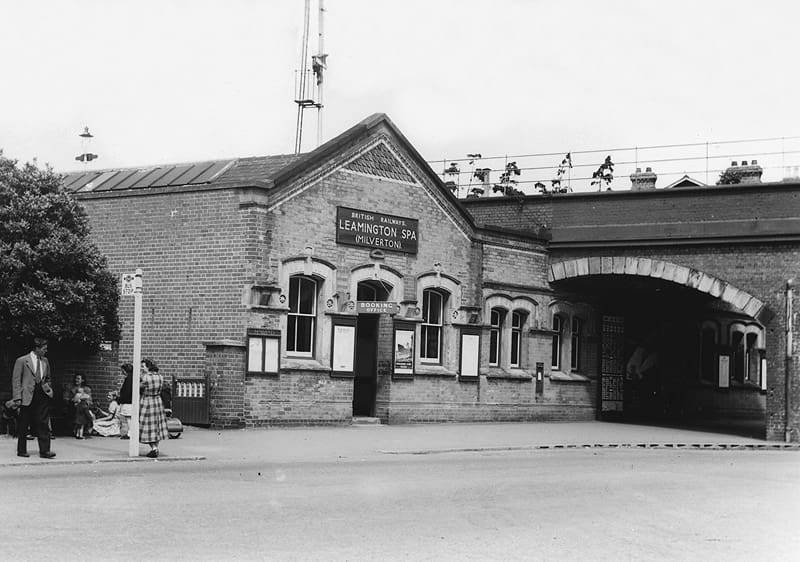
Although this ran close to, and parallel with, the GWR line a station was not built near the GWR station until February 1854. This was on a site off Avenue Road in Leamington and it was initially known as Leamington Priors but was later named Leamington (Avenue) with an area outside known as Station Approach. In March 1860 a new and enlarged Avenue Station was opened. It was built by Mr Parnell of Rugby to London and North Western Railway design at a cost of £4,500. The booking hall contained ornamental tiles by Mann and Co of London. A footbridge from Old Warwick Road crossed the GWR line to Avenue station with no access to GWR platforms. A notable structure along the line was the bridge over the canal at Radford Semele which still exists. The final evolution of this line was a branch from Marton Junction to Daventry and Weedon and a junction with the main London to Birmingham Line.
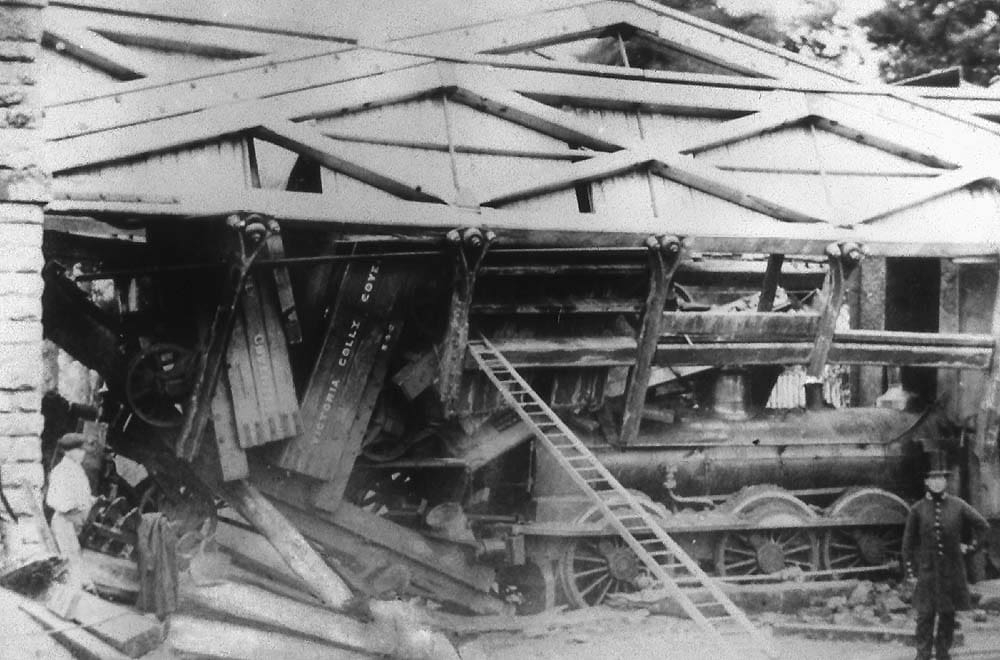
One tragic accident happened on the line to Coventry in June 1861 when a steam locomotive hauling a goods train fell through the bridge across the road junction between Leek Wootton and Hill Wootton. The driver and fireman were killed instantly when the tender fell onto the loco below. There were reports that the bridge was known to be unstable and the investigation blamed the accident on the use of brittle cast iron for the main structure.
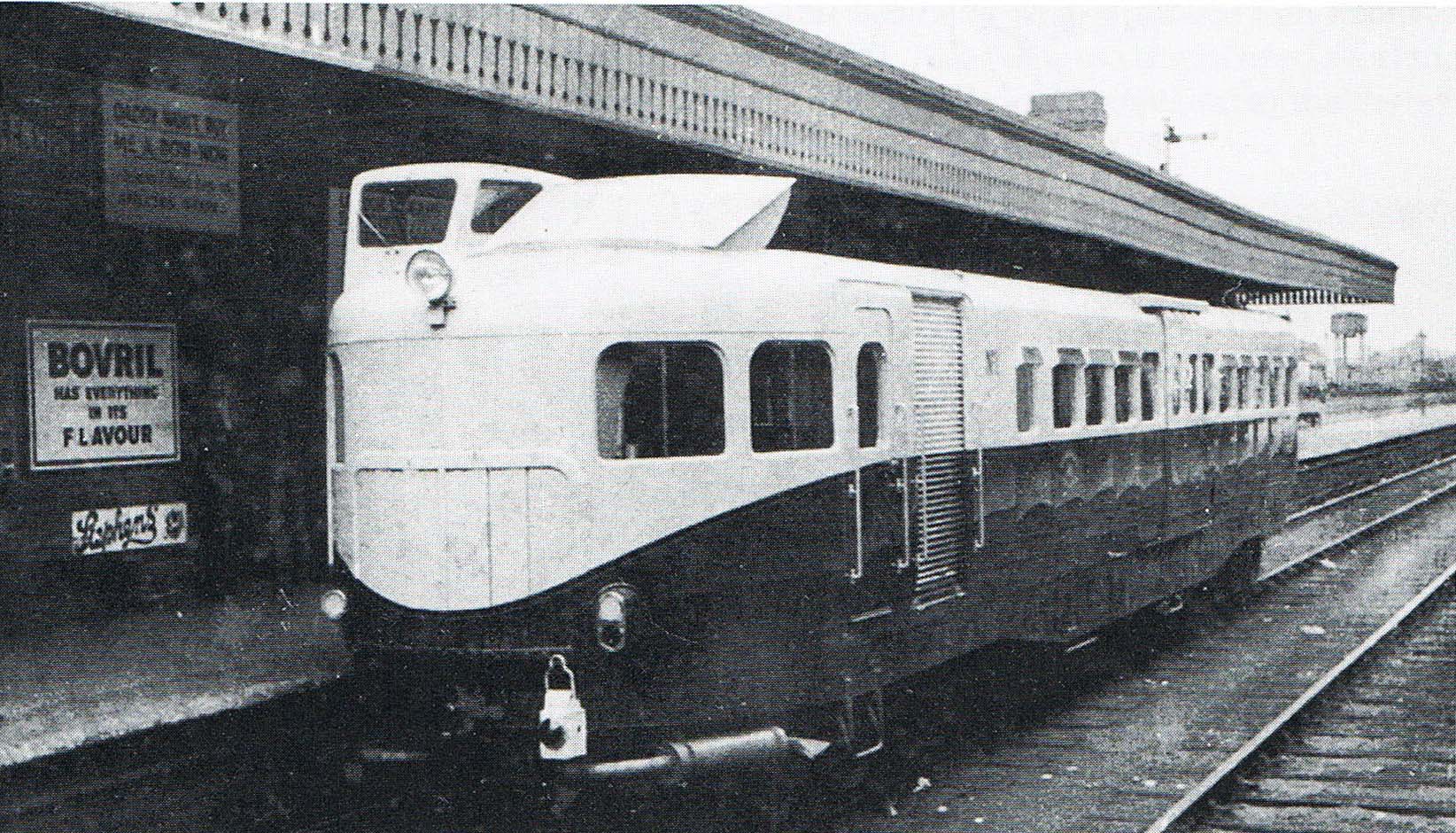
photo MEJ Deane
This line was notable in the 1930s for the use of Armstrong Siddeley railcars which had Michelin pneumatic tyres. On 1st July 1939 an IRA bomb exploded in the cloakroom in Milverton Station but there were no injuries.

Passenger service on the line to Rugby ceased in 1959 (well before the Beeching report) but freight services continued until the mid 1960s. On 15th September 1958 passenger services between Leamington Spa (Avenue) and Weedon were withdrawn and the line to Weedon closed in 1959. A few goods trains used the line from Rugby and part of the Weedon line for access to Southam cement works.
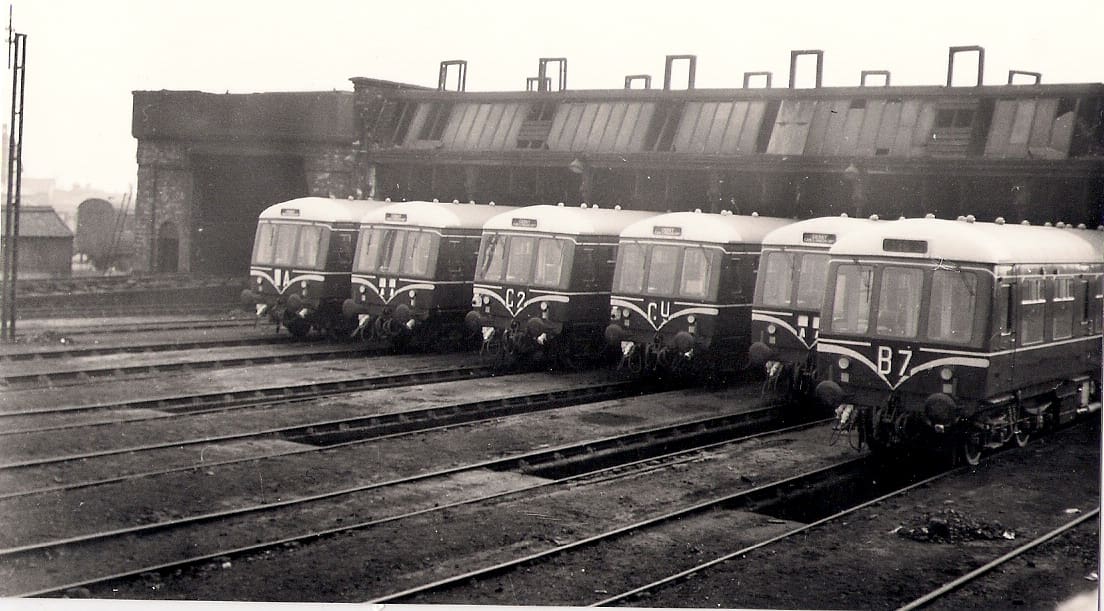
Courtesy Patrick Kingston
On 17th November 1958 the Warwick (Milverton)engine shed closed. Passenger services between Leamington Spa(Avenue) and Rugby ceased on 15th June 1959 and a substitute Midland Red bus service, no 561, was introduced.

Courtesy Patrick Kingston
Leamington Spa (Avenue) station closed on 16th January 1965 following the Beeching Report and passenger services to Kenilworth, Coventry, Bedworth and Nuneaton were withdrawn. The track was used only for goods until 1969 when it became disused. The line reopened in 1977 and continues in use for passengers and goods.
Click here for Part Two and Part Three
Mick Jeffs and Barry Franklin, January 2014