
9440
William James Riland Bedford was killed in action on 22nd April 1943, aged 45, while commanding the 152 (The Ayrshire Yeomanry) Field Regiment, Royal Artillery in Tunisia. He is buried in the Medjez-el-Bab War Cemetery. He is commemorated on the Winchester College war memorial and the Ayrshire Yeomanry memorial.
William was born in Sutton Coldfield in 1898, the son of the Rector of Sutton Coldfield, Rev. William Campbell Riland Bedford and Eleanor Phoebe (née Chance). He was the youngest in the family with three older sisters. William attended Winchester College, where he sang in the choir.
William was a career soldier. He joined the Royal Artillery as a Second Lieutenant in 1916, aged 18, serving in France and Belgium from August 1917 to July 1918. During that period he was wounded and promoted to Lieutenant.
After the war he served in several places overseas, including India and Iraq. The 1921 census shows him at Camp Cowit in Palestine.
During this period his parents retired and were living in Offchurch in 1911, and at ‘Cotswold’ 11 Lillington Road in Leamington in 1921. Their choice of Leamington for a home in their retirement may have been because their youngest daughter was living nearby. Pheobe Stella Bedford, who was 15 years older that William, had married Beaumont Albany Percival in Gibraltar in December 1917. The following year Beaumont changed his surname by Royal License to Fetherston-Dilke as a condition for inheriting Maxstoke Castle from his uncle.
William’s father, Rev. William Campbell Riland Bedford, died in Leamington in 1922. Later that year William married Mary Conyers Clerk in Wellesbourne. Mary was also from a prominent local family and their engagement was announced in The Tatler. Their large wedding was widely reported and newspaper accounts describe the newlyweds ‘returning to Leamington’ before leaving for their honeymoon.
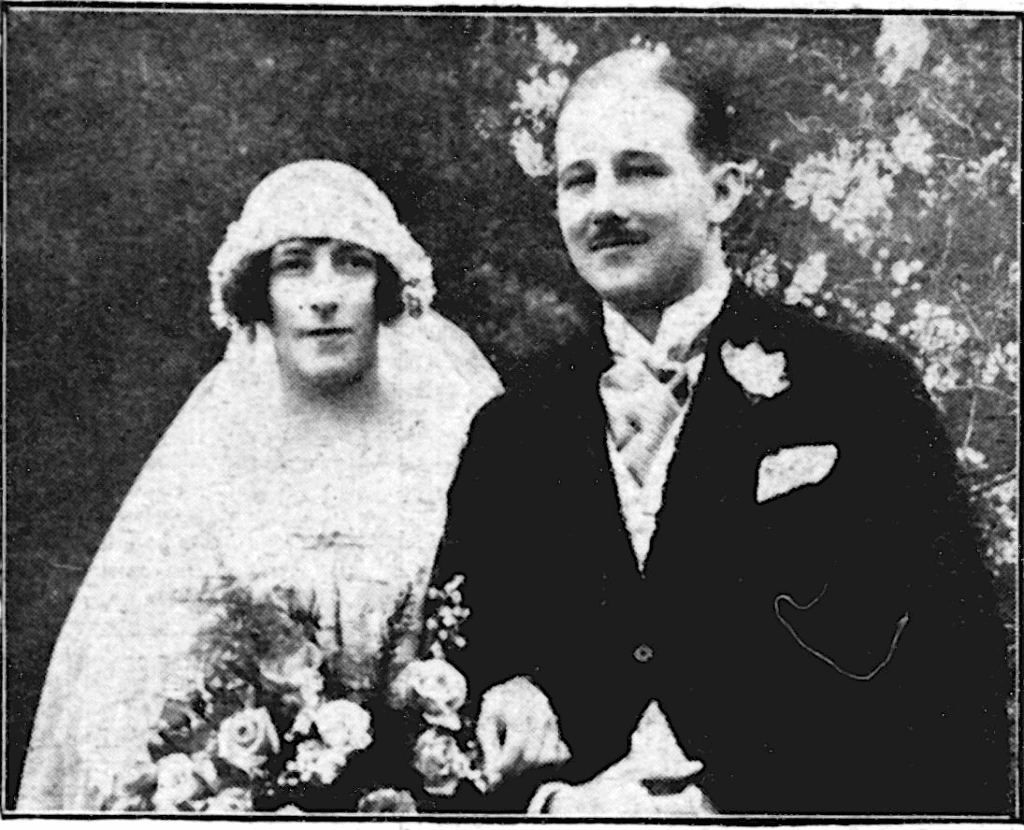
Royal Leamington Spa Courier and Warwickshire Standard, 17th May 1922
William’s mother Eleanor continued to live in Leamington until her death in 1928. William and Mary seem to have set up home in Bishopstone, Salisbury where Mary was living in 1939.
William’s military career continued with promotions to Captain in August 1929, and then to Major in 1938. At the outbreak of war in 1939 he was a General Staff Officer and Aide-de-Camp to the divisional Commander in Egypt. He was promoted again to Lieutenant Colonel during 1941and took command of the 152nd (Ayrshire Yeomanry) Field Regiment, Royal Artillery. This regiment took part in Operation Vulcan, an Allied offensive aimed at destroying Axis forces trapped in northern Tunisia. They were operating under the British First Army as part of the core artillery support, tasked with firing heavy barrages to suppress dug-in German machine-gun, mortar, and anti-tank positions. A report in an Ayrshire local newspaper, The Irvine Herald, has the following description: ‘During intense shell and mortar fire, a mortar bomb landed near the Carrier in which Lt. Col. Bedford was travelling, killing him instantly’. His death occurred just three weeks before the final Axis surrender in North Africa on 13 May 1943.
William Bedford was initially buried near where he fell in the field, and his body was later moved to the Medjez-el-Bab War Cemetery.
Beaumont and Phoebe Fetherston-Dilke continued to live at Maxstoke Castle, although the 1939 Register shows them living in Beauchamp Avenue in Leamington, probably because the castle was requisitioned by the ministry of Aircraft Production. It was used for the remote storage of aircraft engines, supplying a factory near Castle Bromwich where Spitfires were being built. Beaumont had a long and successful career in local government becoming Mayor of Leamington twice, in 1945-6 and 1950-51.
Additional sources of information
www.maxstokecastle.com/history