

Part One of Two (Click Here to see Part Two)
Hunting country
The large tracts of permanent pasture to the west and south of the new town of Leamington, 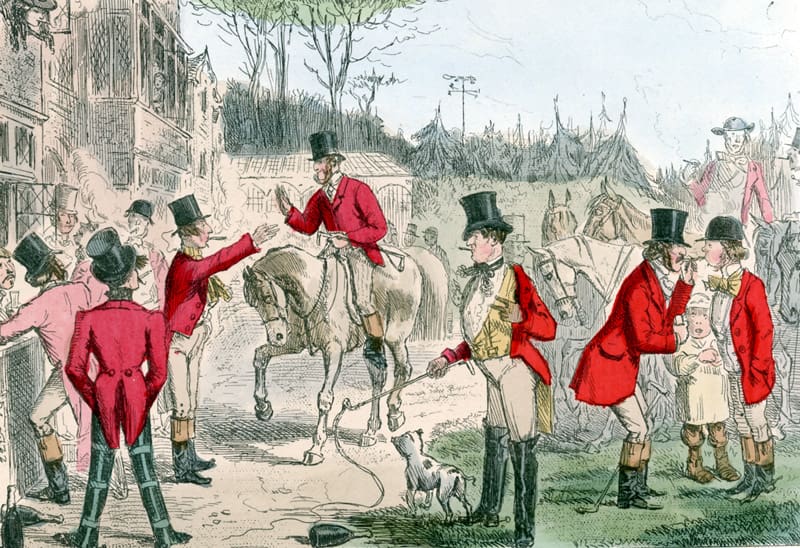 formerly given over to sheep and cattle grazing since medieval times, was prime fox hunting country. Writing in 1841 the distinguished travel writer Dr Augustus Granville had this to say about Leamington – “The neighbourhood may be of the first water for a hunt; and that it is so the very progress of Leamington town testifies; for we must be of good faith and confess that hunting as much as water-drinking has contributed to that progress”. Within a few years at the start of the 19th century the town attracted not only those who rode to hounds but the more affluent men in pink who owned packs of hounds. Chief among these was Lord Middleton who became Master of the Warwickshire Hounds in 1811. He purchased Mr John Corbett’s hounds for the truly astonishing sum of 1,200 guineas and brought the pack to Leamington. It has to be said that a pack of hounds was rather more than a couple-of-dozen animals.
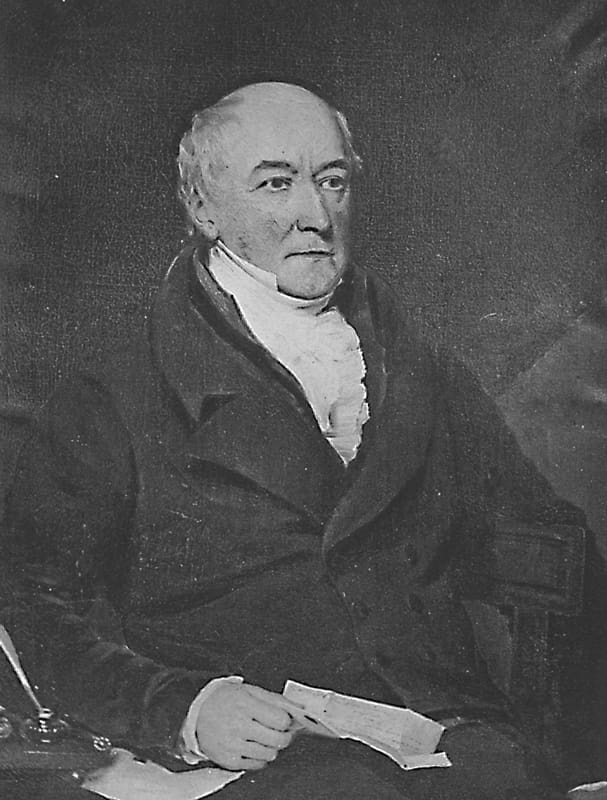
The Annals of the Warwickshire Hunt contains a full listing of Lord Middleton’s pack with their names and pedigrees, the pack comprised eighty and a half couples, a total of 161 hounds. Fox hunting at this period was very much the preserve of the aristocracy, landed gentry and country parsons and those military men on leave from their regiments, all of whom had both the time and the wherewithal to spend several days each week in the saddle. Lord Middleton’s hounds hunted five and sometimes six days a week throughout the winter months. Leamington was a very convenient centre for the hunting fraternity to be based, with well- appointed hotels and a full calendar of social functions of every description. Many of the hunting types took large houses for the season or suites of rooms in local hotels.They were quick to realise that with so much testosterone and horseflesh manifest, there was only one thing more that would make their stay in town complete and that was horse racing and steeplechasing .
Early horse races
The first organised horse races in Leamington were held in the 1830’s.They were rather ad hoc affairs which in the words of the local newspaper were ‘got up only by a few spirited individuals for the gratification of such of the country-folk who keep ‘high holiday’ on Easter Monday’. The Leamington Courier of 5 April 1834 gives a report of the Leamington Races held on Easter Monday of that year. The four races on the card took place on fields adjacent to the Emscote Road occupied by Mr James Gill a Leamington saddler. The report goes on to detail the many diversions on offer for the ‘great concourse’ of pedestrians in attendance which included ‘a dozen substantial & commercial booths’ which we can assume to be a euphemism for beer tents erected by local pub owners.We also read that among the other entertainments laid on were roulette tables and a cock pit for those who fancied a bit of cock-fighting. The principal race at the meeting, The Leamington Stakes over two miles, was occasioned by more excitement off the course than on when two of the first three horses to pass the winning post were the subject of objections.
Steeplechasing arrives
In the early 19th century, people developed something of a mania for steeplechasing which 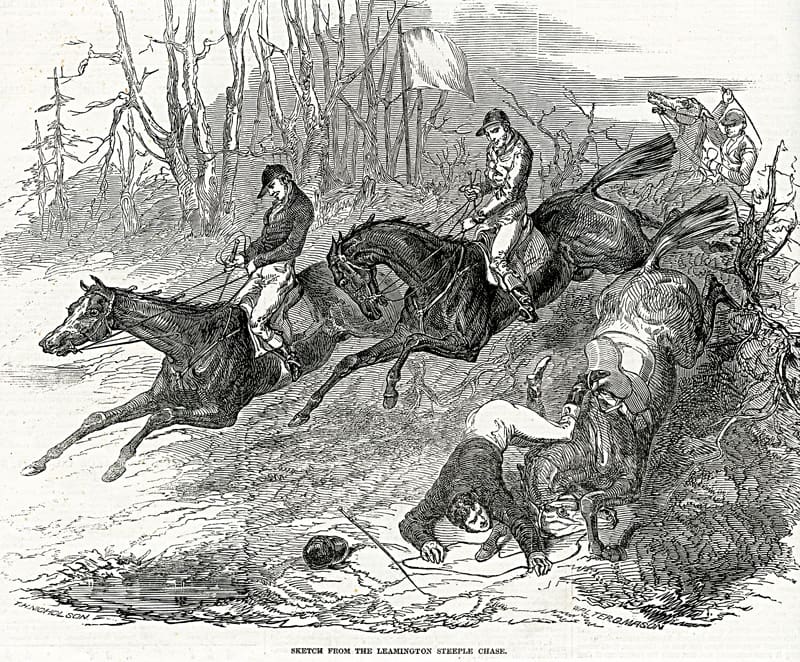 became a very popular sport both for participants and spectators. As the name suggests, it was originally a cross-country horse race over obstacles with church towers & spires serving as landmark guides for the riders. A number of steeplechases were held in Warwickshire and the first local event was held in November 1834 over a four-mile course laid out between Southam and Stockton. No record exists as to who organised this but the clues point towards the involvement of the Leamington hunting set since similar races were held over succeeding years in November and were advertised as the Leamington Steeplechases. Races were again held at Southam in 1836 and at Ashorne the following year. The first record of steeplechasing near Leamington is in 1839 when a course on the Newbold Hills (Campion Hills) was used for several years for November meetings. Early steeplechasing was entirely unregulated, there was no governing body and there was widespread corruption. There were disputes of every sort and frequent objections about the age of horses, the eligibility of riders and their residential qualifications. Races were frequently organised by local hoteliers to maximise their letting of rooms in the winter months and to cash in by providing the lavish dinners and subscription balls that were an important feature of the racing season. The other great motivator for the owners of steeple chase horses was of course money, both as prize money and in private wagers between them to determine who owned the best horse.