
What became known as “The Jewel Factory” was based on Tachbrook Road, Royal Leamington Spa, where all kinds of jewellery and other items made of precious metal were manufactured.
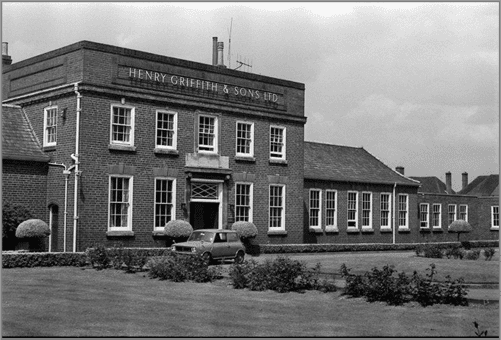
The firm of Henry Griffith was established in Birmingham in 1850 and moved to a new purpose-built factory in Leamington in 1919/20. The move from Birmingham was to take advantage of inducements such as grants offered by the former Leamington Borough Council after the First World War to companies which were willing to move their business to the town to bring much-needed jobs.
In 1947 the company acquired more land and also at the British Industries Fair at Olympia in London the firm advertised itself as –
‘Manufacturers of Fine Jewellery including: Cigarette Cases; “Fidelity” (Registered) Wedding Rings; Signet Rings; Cuff Links, Studs and Safety Pins; Bracelets; Brooches; Watch Bands and Bracelets. All types of Fancy Jewellery in Precious Metals and Silver. Also Silver Thimbles and Serviette Rings’.
During the 1970s the company slowly declined and was owned by Caledonian Holdings; as 1982 dawned the workforce was less than 100 and it finally closed in November 1982. It became the site for Ladbroke Bodies, a vehicle body repair shop.
In the early days the company provided sports facilities within its grounds with two bowling greens at the front of the premises and a cricket/football ground to the left of the building. The bowling greens were lost when a new road access was created within the site about 1957. The sportsground was sold off about 1963. Part of it had the new building erected on it for Courier Press, publishers of the Leamington Courier, and the rest was sold about 1980 which allowed Queensway to go through it to join Tachbrook Road.
During World War Two there were air raid shelters on the land as the company, like many others in Leamington, was undertaking war-work for aeroplanes, rumoured to be Lancasters and Spitfires.
Henry Griffith & Sons were popular local employers for many years in the mid-20th Century. Many school leavers had completed a foundation year at the local art school before undertaking an apprenticeship at the factory. They had excellent training. Their work was highly skilled and closely supervised.
Once the factory closed, the site was sold for housing with the roads being named after jewels, including Emerald Way and Sapphire Drive (a rejected proposal was that this one should be Ingot Way).
This page is one of many which are based on articles in our book entitled A History of Royal Leamington Spa in 100 Buildings which was published in 2018 and is no longer in print.